|
|
Dear Midwest Park Supporters,
As we approach the busiest time of the year for national parks in the Midwest, we reflect on a challenging winter. A renewed threat of copper-sulfide mining in the Voyageurs watershed, ongoing efforts by the Department of the Interior to censor history and science in parks, and a presidential budget that calls for massive cuts to National Park Service operations all threaten the places we cherish. However, at the same time, local efforts to support and improve our parks are making steady progress. Thank you for standing with us in defense of our parks and in support of the staff and communities that bring them to life.
Protecting Voyageurs National Park and the Boundary Waters
Sulfide mining proposals in the Rainy River watershed of northern Minnesota pose a threat to both Voyageurs National Park and the Boundary Waters Canoe Area Wilderness. Any water pollution generated by these mining activities would pollute the downstream national park and wilderness area and cause harm to the fish, wildlife and vegetation that draw hundreds of thousands of visitors yearly.
Due to this threat, an extensive environmental review was undertaken, leading to a 2023 administrative action that put in place a 20-year ban on sulfide mining on federal lands in the watershed. This provided more time to seek permanent protection through Congress. However, a bill passed in April using the Congressional Review Act (CRA) undid those protections, opening the way for sulfide mining in the watershed of Voyageurs.
The fight to protect Voyageurs and the Boundary Waters is not over. There is likely to be litigation on the use of the CRA to undo the mining ban, but the real focus is on the state of Minnesota as a backstop. The state has a central role in deciding whether mining happens in this watershed through environmental reviews and permitting. The state also has some land that is leased to mining companies. So even with the federal government fast-tracking its process, the state has its own environmental review and permitting process to follow before any new mining can move forward. Given that, the focus now is to put pressure on the state to allow mining leases on their lands to expire, ensure state environmental laws are followed, and seek new state laws that will provide further protections in the watershed.
|
|
 |
|
|
Bringing National Parks and Great Lakes Stories to Capitol Hill
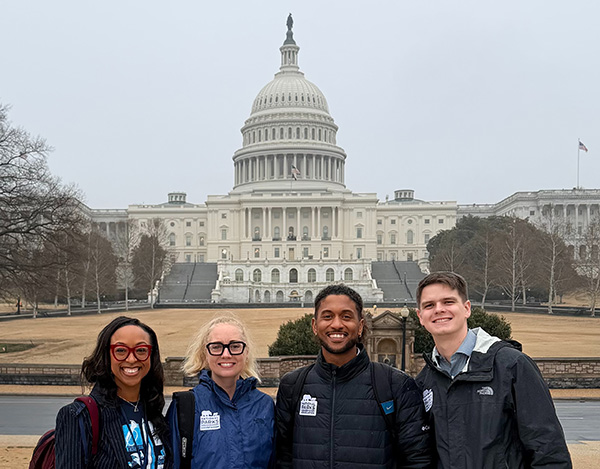
This spring, NPCA’s Midwest team took national park issues directly to members of Congress during two fly-in events in Washington, DC. In March, we joined partners and community members for Great Lakes Day, an annual convening of clean water advocates organized by the Healing Our Waters–Great Lakes Coalition, which NPCA co-chairs. Together, we shared stories of how the Great Lakes Restoration Initiative is used to restore and maintain national parks in the Midwest. Our efforts have already produced promising results, as a bill to reauthorize the Great Lakes Restoration Initiative was recently passed in the House of Representatives. We are currently working to advance a similar bill in the Senate. If passed, this will authorize the Great Lakes Restoration Initiative at $500 million annually through 2031.
In April, NPCA brought together volunteers, donors, partners and staff for National Parks Advocacy Week, where we called on members of Congress to provide robust funding for our national parks and to support the staff who operate and maintain them.
Across both events, NPCA met with the offices of more than 100 members of Congress, including members representing South Dakota, Nebraska, Minnesota, Wisconsin, Michigan, Illinois, Indiana, and Ohio.
|
|
 |
|
|
Pullman Cultural Trail
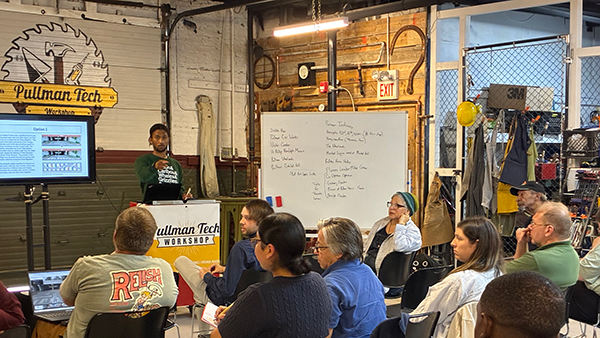
NPCA’s Midwest team has continued to advance coordinated, momentum‑building work at Pullman National Historical Park with a focus on alignment and long‑term implementation of the Cultural Trail in and around the park. In February, we convened a Pullman Cultural Trail retreat that brought partners together for a participatory working session centered on shared understanding, systems thinking, and laying the foundation for collaborative action. Building on that work, in April, we launched From Alignment to Action, a meeting series dedicated to planning the Pullman Cultural Trail. At our first convening, we began translating retreat insights into concrete next steps and confirmed a baseline set of landmark sites to anchor early trail development. We also advanced priority infrastructure work regarding an artistically styled, Pullman-centered crosswalk design and explored approaches to digital interpretation using tools such as QR codes and ArcGIS.
In parallel, NPCA partnered with Metra—the Chicago area’s commuter rail system operator—to support federal funding applications to modernize the historic 111th Street Station, including submitting letters of support for the Federal Transit Administration’s All Stations Accessibility Program and USDOT’s FY26 Better Utilizing Investments to Leverage Development (BUILD) Grant Program. These needed funds would help support Pullman’s growth as an accessible, connected and community‑anchored national park.
|
|
 |
|
|
Momentum Building in the Calumet Region
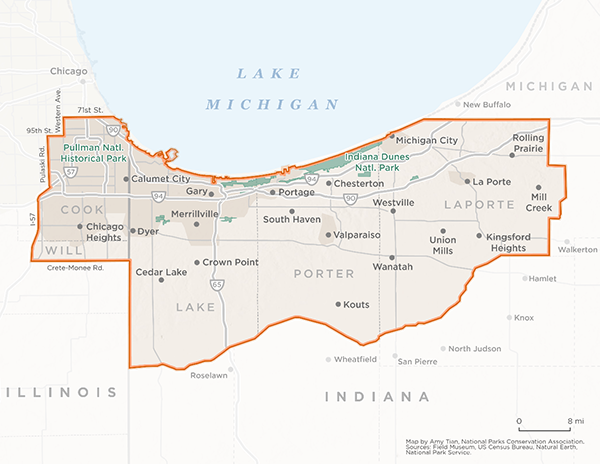
After years of advocacy from NPCA and our allies in the Calumet Heritage Partnership, legislation to designate the Calumet National Heritage Area (NHA) in northwest Indiana and southeast Chicago was recently introduced in both chambers of Congress. The Calumet NHA will help expand upon the stories told by the region’s national parks—Pullman and Indiana Dunes—and offer a more comprehensive look at conservation and American history for visitors and locals alike. See NPCA’s website for more information on the Calumet NHA effort.
|
|
 |
|
|
Environmental Journalists Convene in Chicago
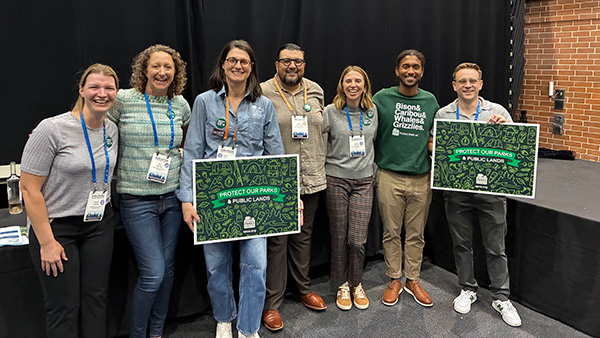
Last month, NPCA’s media team met in Chicago to attend the annual Society of Environmental Journalists conference. Comprised of six individuals from across the country, our media team collectively generates thousands of news articles each year. In today’s media environment, journalists have limited newsroom support, often being asked to cover multiple stories at a time to stay on top of key topics. With this additional strain, they rely on NPCA’s media team and staff experts for fact-checking, photos, b-roll, links to studies or statistics, and more. At the conference, NPCA’s media team hosted an engaging reception where NPCA Midwest staff joined to connect with environmental journalists from across the country, planting seeds for future stories and park trips, and pitching NPCA’s experts.
Spotlight: Lisette Perez, NPCA Next Generation Advisory Council Member
|
|
|
|
Hailing from Chicago, Lisette represents the Midwest on NPCA’s Next Generation Advisory Council — a program launched by NPCA more than a decade ago to explore effective methods of engaging younger generations in national park advocacy and protection.
|
|
|
|
|
|
|
|
Lisette’s passion for environmental justice and background in environmental education and climate advocacy make her a tremendous asset to the council.
Lisette shared one of her favorite national park experiences, describing it as, “such an amazing experience to learn a lot about how climate change and other factors are impacting Joshua Tree and parks across the country. This was such a rewarding experience and it’s all thanks to NPCA.”
Visit NPCA’s website to learn more about Lisette and the Next Generation Advisory Council.
Thank you!
Thank you for your support as we work to protect our parks and preserve the stories they tell. Looking to get more involved? Learn more on our website.
Our collective effort is making a difference at national parks across the Midwest, from Wind Cave to Cuyahoga Valley. While we may not win every battle to protect our parks, with your support, we will remain steadfast in the fight.
Sincerely,
|
|
|

Crystal M.C. Davis
Sr. Regional Director, Midwest
|
|
|