 |
|
|
Dear Park Friend,
Across the Southwest, our national parks are under pressure—and this year, the stakes couldn’t be clearer.
Right now, we’re fighting to protect places that hold deep cultural meaning and irreplaceable history, like Chaco Culture National Historical Park, where hard won protections are being rushed toward revocation after only a few short years. We’re pushing back as congressional tools meant for rulemaking are misused to undo public- and Tribal informed management plans at Grand Staircase Escalante National Monument—setting a dangerous precedent for protected lands nationwide.
We’re also confronting decisions that directly affect the health of our parks and communities. In Colorado, the Environmental Protection Agency’s rejection of a widely supported clean air plan threatens visibility, ecosystems and visitor experiences at multiple national parks—prompting NPCA to take the agency to court. Along the southern border, we’re once again standing up for Organ Pipe Cactus National Monument, where new border wall construction would cut through fragile desert landscapes and sacred sites, putting Quitobaquito Springs and the life it sustains at risk.
At the same time, the National Park Service itself is being stretched thinner than ever. Chronic staffing shortages, funding uncertainty, and political interference are undermining science-based planning and day-to-day park management—from the sudden elimination of successful reservation systems to the silencing of park expertise. The question isn’t whether these challenges affect parks—it’s how long our parks, and the people who care for them, can keep absorbing the impact.
This Southwest Region Field Notes is a snapshot of what it looks like to meet these challenges head on. With your support, NPCA is showing up—in courtrooms, on Capitol Hill, alongside Tribes and partners, and in defense of the professionals who make our parks work. We’re advocating for stronger protections, adequate staffing and funding, clean air, and thoughtful planning rooted in public input, deep experience, and scientific research.
None of this happens without you. Every action we take is strengthened by a community that believes our parks are worth defending—especially when it’s hard, especially when the need is now.
Thank you for standing with the parks in this moment. Together, we’re ensuring that the Southwest’s parks are not just beloved but also protected—now and for generations to come.
|
|
 |
|
|
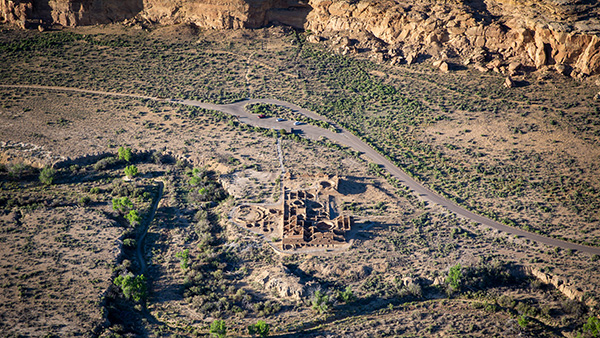
Chaco Cultural National Historical Park at Risk
In New Mexico, a 10-mile protection zone prohibiting new federal oil and gas leases surrounding Chaco Culture National Historical Park is at risk of being revoked.
On March 31, the Trump administration proposed the elimination of this protection, providing only seven days for the public to comment on the plans. Removing this protection zone threatens to desecrate sacred sites with over a thousand years of rich and culturally important history, diminish clean air and dark night skies, and puncture scenic views with the sights and sounds of industry. The 10-mile protection zone around Chaco was created in 2023, after decades-long efforts by the Pueblos and other Tribes to protect this sacred land, which is also a UNESCO World Heritage Site and an International Dark Sky Park. Now, only three years later, the Department of the Interior is pushing through this revocation with minimal public comment periods, even though over 90% of nearby federal public land is already leased for energy development.
NPCA stands with the Pueblos of the Greater Chaco Region in strongly opposing this decision. As explained by NPCA’s New Mexico Program Manager, Maude Dinan, “This decision sends a dangerous message that no place, not even one that holds a thousand years of history, is too important to sacrifice for oil and gas drilling.” An Environmental Assessment is set to be released in the coming weeks, with another critical opportunity for the public to weigh in.
|
|
 |
|
|
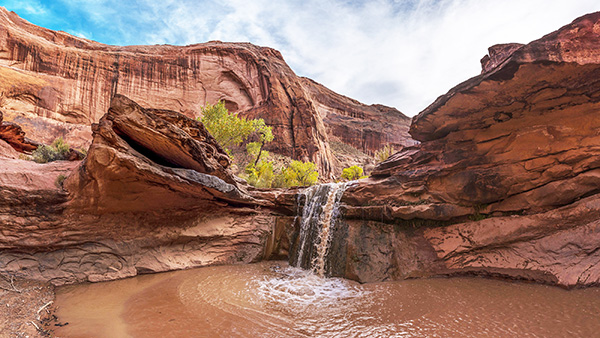
Grand Staircase-Escalante National Monument Threatened Again
The Congressional Review Act (CRA), intended to apply to formal rules and not agency management plans, is being used to overturn the management plan for Grand Staircase-Escalante National Monument through a joint resolution introduced by Utah lawmakers. The current management plan was designed to guide future decisions including recreational access, cultural site protection, wildlife habitat safeguards, grazing and hunting access and off-road vehicle routes for the 1.9 million acres within the monument. The use of the CRA to remove the national monument management plan sets a dangerous precedent for national parks and monuments across the country, overturning decades of public, local community and Tribal input. NPCA strongly opposes this resolution, which threatens the monument, adjacent national parks and protections for public lands nationwide. Urge Congress to vote NO on H.J. Res.151 and S.J. Res.109.
Major Clean Air Setback for Colorado’s National Parks
Earlier this year, without providing the public any opportunity to comment, the EPA fully rejected what would have been Colorado’s most promising plan to protect our national parks and communities from air pollution. The plan included voluntary and industry-supported retirement dates for major contributors to regional haze, including coal plants impacting Rocky Mountain, Mesa Verde, Great Sand Dunes and Black Canyon of the Gunnison National Parks. The plan was also overwhelmingly supported by local governments, environmental groups, and utilities, and would have achieved massive reductions in air pollution –including 23,223 tons of nitrogen oxides per year.
EPA’s decision to fully disapprove Colorado’s regional haze plan also has national implications: the agency is now actively citing its decision as precedent to disapprove other strong regional haze plans that include enforceable deadlines for polluters. Last month, NPCA filed a lawsuit against EPA’s reckless decision. The case is in the initiation phase right now with briefing likely to begin in early summer.
|
|
 |
|
|
Border Wall Construction in Arizona’s National Parks
Both of Arizona’s NPS sites on the southern border are threatened by construction of the border wall. NPCA has long opposed and fought against these projects due to the devastation they cause these remote and rugged park sites. Construction of a primary and secondary wall at Coronado National Memorial has moved rapidly, threatening one of the last wildlife corridors on the Arizona-Mexico border, a unique Sky Island ecosystem, and an important historic landscape.
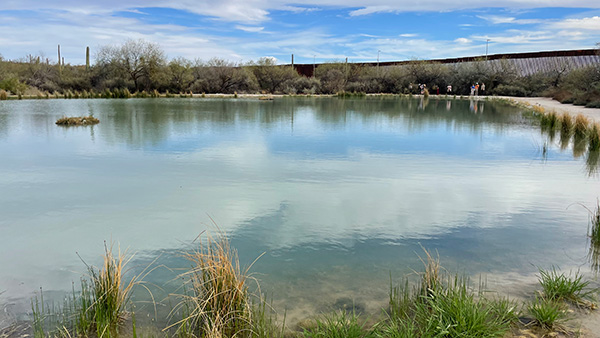
Organ Pipe Cactus National Monument is also an incredible national park site along the US-Mexico border. The Department of Homeland Security recently revealed its plan to build a secondary border wall through the site. Organ Pipe already has a first border wall that was constructed during the last Trump administration, so pushing construction of a second layer of border wall through its fragile landscape and sacred cultural sites is unwarranted and dangerously irresponsible. NPCA is particularly concerned about the devastating effects that this wall construction could have on Quitobaquito Springs, a unique desert oasis that is an important cultural site for the local Indigenous communities and protects critical habitat for endangered species. NPCA will continue to elevate this story and call for the halting of these projects that are causing irreversible destruction to our national parks.
Planning and Management Challenges at NPS Continue
Staffing and funding continue to be threatened across the National Park Service, undermining staff’s ability to protect natural and cultural resources and provide quality visitor experiences. I wrote about the risks in this Writers on the Range piece “What happens to our parks when rangers disappear”?
At Arches National Park, the highly successful pilot timed entry reservation system was eliminated for 2026, with reservations at Rocky Mountain National Park spared for now. Reservation systems have been shown to help parks adapt to visitation levels across seasons and improve the visitor experience. The sudden elimination of these systems raises serious concerns about the Park Service’s ability to manage heavy traffic during peak times, which causes traffic jams, over-full parking lots and trails, resource destruction from roadside parking, and increased strain on already too few staff. This decision ignores Park Service planning and expertise and will likely cause even more chaos and uncertainty at underfunded and understaffed parks.
NPCA has been working with partners and local communities to push back on proposals to open up routes inside national parks to Off-Highway Vehicles (OHVs), which would strip the NPS ability to fully manage park roads. One piece of legislation, the OHVs in Capitol Reef National Park Act, specifically targets Capitol Reef, where the red rock cliffs and dark night skies offer a unique peace within the park. The second bill, the State Motor Vehicle Laws in National Park System Units Act aims to open up all national parks and monuments to OHVs subject to state law, which would greatly impact wildlife, fragile ecosystems, and visitor experiences.
|
|
 |
|
|
United by Parks: Advocating Together
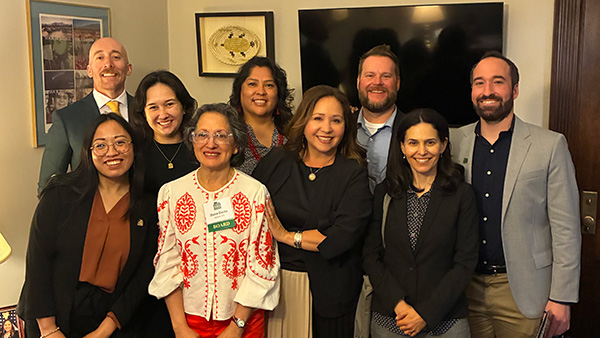
NPCA Southwest staff, board members, regional council members, contract organizers and Next Gen Council members traveled to Washington D.C. for NPCA’s annual National Parks Advocacy Week, April 14-16. The team met with nine congressional offices and advocated for a long list of priorities for our national parks, including Legacy Restoration Fund reauthorization, adequate staffing and funding for NPS, and standing up against historical erasure. A highlight for the team was meeting with the newest member of Congress from Arizona, Rep. Adelita Grijalva, who is continuing her father’s legacy of public lands and cultural protection.
As park funding and staffing continues to be threatened, we ask that you urge your members of Congress to stop any further NPS staffing cuts and restore the thousands of positions lost. Multiple parks in the Southwest face additional challenges from canceled reservation systems, overturned management plans, and intense censorship, all of which threaten park protections and visitor experiences.
Grand Canyon Poem - “Time Made Visible”
Poem by Sidh Jaddu, student advocate
A deep silence runs through the land.
The ground opens, wide and endless.
Red cliffs rise, glowing in the sun.
Dust hangs in the air like breath.
Shadows crawl slowly across the walls,
Tracing the paths where rivers once flowed.
Each layer shows a different lifetime –
Two billion years stacked in color.
Wind remembers what water once wrote.
The canyon reads like an ancient book.
Fossils lie between its pages,
Coral and shell from vanished seas.
Every chapter is written in stone.
The sky feels open, almost too big.
Far below, a thin green river winds,
Patient as thought, sharp as memory.
Its voice hums softly through the heat.
We stand at the edge, not saying much.
The air smells like dust after rain.
The ground feels alive with history.
Quiet, steady, endless change.
A story told without words.
The Grand Canyon: time made visible.
Sincerely,
|
|
|
Alex Johnson
Southwest Regional Director
|
|
|




